This is the case of the missing ROI, the first file in our Data Detectives series. As in most good mysteries, the obvious suspect turns out not to be the culprit.
The evidence
When we dust this scene for clues, three things come up again and again:
- The AI drew on inconsistent data, so its outputs lacked context and couldn’t be trusted from one day to the next
- Teams cleaned and reconciled data by hand, which quietly absorbed the savings the AI was meant to deliver
- Each team defined the outcome differently, so nobody could agree what success looked like, let alone measure it
The usual suspects
The model, the vendor, the use case and the team delivering it all get hauled in for questioning, and they all have the same alibi. The problem was already there before they arrived.
The investment went into the visible AI rather than the foundations beneath it. Without trusted, governed data and clear ownership, the AI couldn’t deliver reliable results, and nobody could show what it had returned. Gartner says organizations with successful AI initiatives invest up to 4x more in data and analytics foundations, which suggests the organizations seeing returns are putting their money where the clues are.
A lead worth following
A leading research and consulting organization that depends on subscription revenue came to Amplifi with a request we hear regularly: it wanted “predictive analytics”. Its data was a different story. The organization held a vast amount of information across customers, publications, conferences and consulting services, but that data was unreliable and poorly understood, which blocked everything from machine learning to generative AI.
Rather than starting with the technology, we started with the outcomes the organization had already named, such as increasing membership and minimizing churn. We broke those down into the data capabilities needed to deliver them, then put quality measures and controls around the base data. A Microsoft data platform brought the data together and documented it formally for the first time, and a governance and quality operating model was built to keep it that way.
The case study calls this stage the “hard-yards”, and it is where the return actually starts. With trustworthy data in place, the organization could ask which articles would perform well before publishing them. Its published research, once structured so its meaning could be searched, also made a ChatGPT-style search tool possible. In only two weeks, Amplifi delivered a proof-of-concept private LLM that lets authorized users ask the organization’s view on any subject, with answers built from its own publications and the sources cited.
To be clear, this is a proof of concept and not a finished ROI figure, with internal rollout still to come. But every use case traces back to an outcome that was defined up front and to data that could be trusted, which is exactly what the missing-ROI organizations lack. Read the full case study.
Not every return starts with AI
The same principle shows up outside AI. A large NHS Trust took a “think big, start small, scale fast” approach to master data management, starting with a small number of focused use cases. By integrating seven key data sets for its cancer pathways, it gave clinicians one place to see where patients were in their treatment. The Trust’s Cancer Manager put the result in simple terms: the work will save three minutes per patient, and “we have thousands of patients!”
The return didn’t come from a bigger budget. It came from a defined use case sitting on data that was ready for it. Read the NHS Trust case study.
Your first lines of inquiry
Every great detective has a method. Ours has three steps, and you can start all of them this week, with no deerstalker required.
- Establish the motive. Every case needs one. Name the single outcome a use case must change and how you’ll measure it, then break it down into the data it depends on before anyone touches the technology. Everyone wants AI, but the want needs to line up with a genuine business need.
- Examine the evidence. As a famous detective once observed, “It is a capital mistake to theorize before one has data.” Test the data behind your use case: is it available, trusted, readable by AI and governed? Knowing the true state of your data also makes funding conversations and expectations far more honest.
- Unmask the hidden accomplice. Count today’s manual cleanup effort. It’s the quiet accomplice absorbing your savings, and it belongs in the baseline the AI is measured against, because otherwise it will go on taking its cut unnoticed.
Case closed? Almost
The ROI was never really missing. It was waiting on the foundations, and that is where the investigation should start.
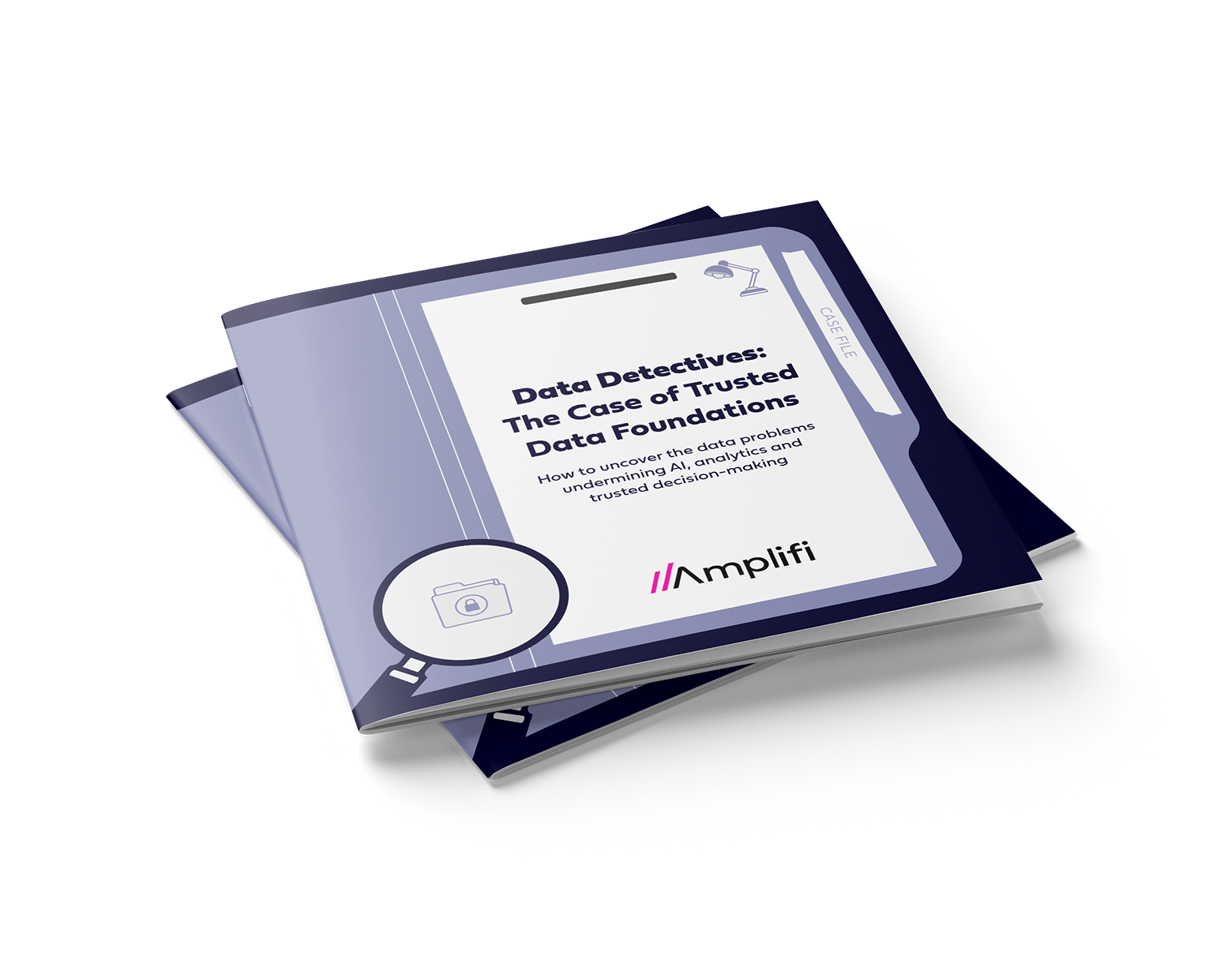
Our guide, Data Detectives: The Case of Trusted Data Foundations, follows five common cases from incident to root cause, with three practical moves for each and a self-check to test the strength of your own evidence.
If you’d like a second pair of eyes on the scene, our Data Capability Assessment measures your data capabilities across six core areas and shows how ready your organization is to deliver on its data and AI ambitions. You get an evidence-based baseline, clear recommendations and a prioritized action plan, not a slide deck.
Learn more about the Data Capability Assessment
Or talk to a data expert about where your own investigation should begin.